Pocket Park or Neighborhood Square? Choosing a Better Short Break
Pocket park or neighborhood square? Compare shade, seating, activity, and upkeep to choose a public space that suits a quick pause or a shared meet-up.
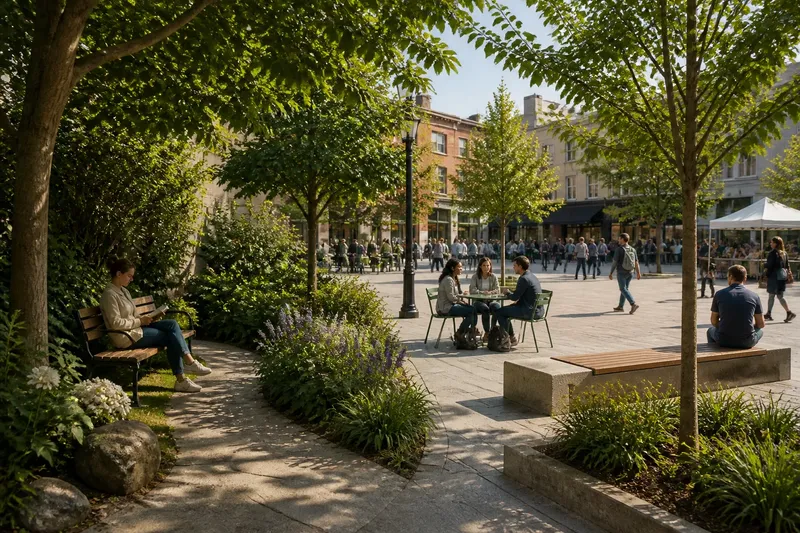
The common mistake in the pocket park or neighborhood square debate is treating both as miniature parks. That can leave a sunny patch of paving too exposed for a quiet break, or a planted nook too cramped for a neighborhood gathering. The difference matters during the ordinary pause between errands: one setting can offer a little shelter and calm, while the other can make it easier to meet, watch, and take part.
What is the difference between a pocket park and a neighborhood square?
A pocket park is a small green space designed mainly for a brief rest among plants, trees, or lawn. A neighborhood square is an open, usually hard-surfaced public space designed to accommodate several kinds of activity, including meeting, passing through, and occasional events.
The distinction is about the space’s central purpose, not a strict rule about size or materials. A pocket park may include a paved path and benches; a square may have a tree bed or planted edge. Look at what dominates and what the layout invites. If a visitor can settle near greenery without being in the way, the design leans toward a pocket park. If people can gather in the middle while others cross or sit around the edge, it leans toward a square.
Which one suits a short break alone?
A pocket park usually suits a quiet solo pause better, especially if it offers a shaded bench, a view of planting, and some separation from the busiest pedestrian flow. Leaves, soil, and tree canopies can soften the feel of nearby traffic. Even a small planted edge gives the eye somewhere calmer to rest.
But greenery alone does not make a useful retreat. A bench facing a blank wall, a narrow seat beside a busy path, or a space with no shade may feel exposed. A square can be the better choice if it has a sheltered seat at its edge, where a person can pause without occupying the main gathering area.
Think of the difference as a reading nook versus a shared kitchen table. The nook encourages a pause apart; the table makes room for people to come together. Neither is better in every situation, but they ask visitors to behave differently.
When does a neighborhood square work better?
A square works better when a short break includes other people or a simple activity: waiting for a friend, eating lunch together, watching street life, or stopping during a local event. A clear central area gives groups room to stand without blocking every route through the space. Seating around its edges can serve people who want to join in and those who prefer to watch.
Hard paving can also make a space adaptable. Movable chairs, a small market table, or a temporary performance can change how the square is used without changing its basic layout. That flexibility depends on practical details: enough room for circulation, places to sit, and edges that do not leave people feeling stranded in the open.
Imagine a block with a sunny paved court and a few fixed benches. If neighbors meet there after work, adding movable chairs near the edge could let them form a small group while keeping a clear path across the center. The observable aim is a space that supports both a gathering and ordinary passage, rather than forcing everyone into one arrangement.
How do shade, seating, and planting change the choice?
Shade can decide whether either space feels usable during a break. Trees provide a canopy and a sense of enclosure, while an awning or nearby building can shelter a seat in a paved square. The useful question is not simply whether shade exists, but whether it reaches places where people can sit or stand.
Seating should match the intended pause. A pocket park benefits from a bench placed to face planting or a view, with enough room nearby for a wheelchair user to sit alongside companions. A square may need several seating types: benches for longer rests, ledges for brief stops, and movable chairs if gathering is part of its role. A single central bench can make a square feel like a waiting area rather than a shared room.
Planting brings more than color. Trees and beds can frame a small green refuge, soften hard edges, and give people a reason to linger. In a square, planting often works best around the perimeter or in carefully placed islands that leave the central area flexible. The balance depends on the site’s intended uses and on local maintenance needs.
What should a designer check before choosing?
Start with the pause the space should make possible, then check how the site can support it. These questions help separate a green retreat from a social forecourt:
- Who is likely to stop? A space serving nearby residents on quiet breaks may favor sheltered seats and planting; a place beside shops may need room for short meetings and changing activity.
- How much room is available? A narrow leftover site may support a planted pocket with a clear path, while a broader open area can accommodate groups and flexible uses.
- Where will people sit? Check shade, views, exposure, and whether seats sit clear of the main route.
- What needs to remain open? Identify the routes people use before placing planters, furniture, or event space.
- Who will care for the space? Choose planting, paving, and furniture that suit the people and resources available for routine upkeep.
- Can the space serve more than one kind of pause? A planted edge around an open center, for example, can offer both a quieter seat and room to meet.
Local access requirements and the instructions for any installed furniture or materials may affect the final layout, so check them as part of design review.
Which design questions help settle the choice?
Can a pocket park host a group?
Yes, if it has enough clear space and seating for people to gather without taking over its quiet corners. A small park designed only around narrow paths and fixed benches may make group use awkward.
Can a neighborhood square include greenery?
Yes. Trees, planted edges, or raised beds can add shade and soften the setting while leaving space for people to meet. Their placement should preserve useful routes and the square’s open character.
Which space is better for eating lunch?
Either can work. A pocket park may offer a calmer seat, while a square can suit a group lunch or a quick meal near shops; the best fit depends on shade, seating, and how busy the area feels.
What if the site needs to support both?
Combine a planted, sheltered edge with an open paved area, then place seating where it serves each zone without obstructing movement. This can give a visitor options for a quiet pause or a conversation in the same small public space.
How can one small space balance retreat and gathering?
Use the site’s edges to provide shelter and the center to provide choice. A tree canopy, planted bed, or low wall can create a calmer boundary; an open surface nearby can accommodate a friend, a stroller, or a pop-up activity. The design should make those uses legible without a sign explaining where people belong.
For a pocket park or neighborhood square, the useful measure is not how much greenery or paving appears on a plan. It is whether someone arriving for a short break can quickly find a comfortable way to pause—alone, with a companion, or alongside the life of the block. When space is limited, a thoughtful edge and a clear place to stop can matter more than choosing a label.